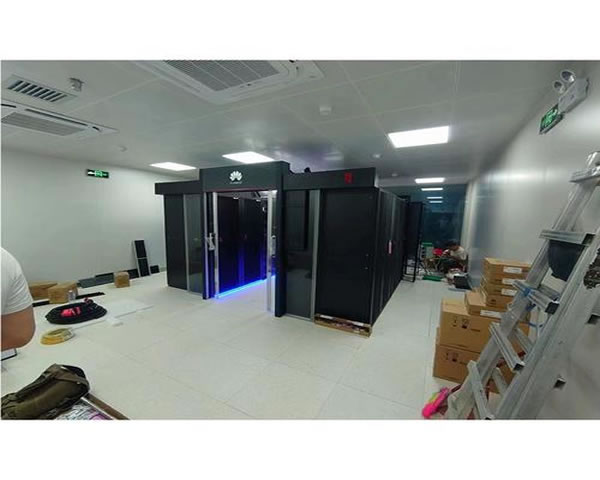
in the classic case of weak current rooms in germany, noise control and environmental management are regarded as core elements to ensure equipment reliability and personnel working environment. this article combines typical project experience to systematically review key practices from noise identification to long-term operation and maintenance, emphasizing implementability and standardization to help engineers and operation and maintenance teams improve acoustic environment quality and system stability in actual projects.
noise source identification and classification: diagnose first, then treat
systematic identification of computer room noise is the first step. from weak current equipment (switches, ups, air conditioning accompanying devices) to ventilation shafts and duct propagation paths, sound level meters and spectrum analyzers should be used to locate the main frequency bands and sound source types. the german case emphasizes data-driven decision-making, separating transient noise from continuous noise, formulating targeted processing strategies, and avoiding blind coverage that leads to cost waste or poor results.
building and computer room layout optimization: separate noise sources from sensitive areas
reasonable floor layout and functional zoning can significantly reduce noise transmission paths. in german practice, weak current equipment areas and office or operation and maintenance areas are separated by walls, walkways and buffers to minimize resonant body connections. equipment entrance and exit lines, maintenance channels and heat dissipation needs should also be considered, and acoustic isolation and heat dissipation and ventilation should be balanced. introducing acoustic assessment in the early design stage can save subsequent rectification costs.
sound insulation and sound absorption measures: pay equal attention to materials and structures
sound insulation and sound absorption are the basis for sound environment management in the computer room. cases show that mid-, high- and low-frequency noise can be effectively reduced by using layered walls, sealing door gaps, sound-absorbing boxes, and arranging sound-absorbing materials at key locations. material selection should take into account fire resistance, moisture resistance and maintainability. construction node processing (such as through-wall pipes and inspection openings) needs to be carried out according to acoustic details to avoid becoming "sound leakage" points.
vibration isolation and equipment installation details: controlling solid spread
solid sound transmission is often a difficulty in noise control in computer rooms. the classic german case emphasizes the elastic vibration isolation of the equipment base, the vibration damping pad of the pipe support and hanger, and the avoidance of direct hard connections. dynamic balance and resonance frequency avoidance design should be carried out for rotating equipment, and fastening and decay parts should be checked regularly during operation and maintenance to ensure long-term effectiveness of vibration reduction measures and reduce secondary noise problems caused by structural transmission.
ventilation and air-conditioning noise control: taking into account ventilation efficiency and acoustic control
ventilation and air conditioning systems are both critical for heat dissipation and often the main source of noise. german projects generally use a combination of silencer sections, curved sound absorption and low-noise fans, combined with frequency conversion control to achieve on-demand speed adjustment to reduce operating noise. at the same time, optimize the air duct cross-section and flow velocity to prevent the generation of turbulent noise, and regularly maintain filters and fan blades to avoid rising noise due to blockage or imbalance.
monitoring and operation and maintenance management: establishing a long-term acoustic environment protection mechanism
long-term results rely on continuous monitoring and standardized operation and maintenance. it is recommended to establish a noise baseline and regular inspection plan, use remote monitoring equipment to record sound level and spectrum changes, and conduct correlation analysis based on temperature, humidity and vibration data. the german case emphasizes streamlined operation and maintenance, closed-loop problem processing and technical file management to ensure that governance measures are optimized simultaneously with changes in equipment to form an auditable environmental governance system.
summary and suggestions
drawing on the classic case of weak current rooms in germany, noise control and environmental management should run through the entire process of design, construction, operation and maintenance. the first priority is accurate diagnosis and reasonable layout, then the selection of sound insulation, sound absorption and vibration reduction solutions that meet fire protection and maintainability, and finally monitoring and operation and maintenance to ensure long-term effects. it is recommended that the project team introduce acoustic experts at an early stage and incorporate governance strategies into technical specifications and acceptance criteria to ensure that the project not only meets performance requirements but also facilitates later operation and maintenance.
- Latest articles
- Enterprise-level Application Hong Kong Site Group Vps Load Balancing And Backup Solution Analysis
- Seize The Trial And First-month Discount To Realize How To Buy Cheap Servers In Cambodia. Practical Steps
- Advantages Of Vietnam’s Native Residential IP In Regional Data Collection And User Behavior Analysis
- Parameters And Deployment Suggestions For Optimizing The Performance Of Cambodian Cloud Servers For E-commerce Scenarios
- Why Companies Choose Huawei Cloud Server Vietnam For Southeast Asian Market Expansion
- Why Enterprises Choose To Access Hong Kong Servers And Bypass Japan’s Hybrid Cloud Strategy
- Interpretation Of Malaysia Unicom’s Serverless Service From An Operator’s Perspective: Common Causes And Division Of Responsibilities
- Security Control List Helps Enterprises Maintain Access Control For Servers Hosted In The United States
- Construction And Maintenance Why You Should Pay Attention To The Service Provider SLA When Renting A German Server Dedicated Line
- Technical Prevention Improves The Ability Of Enterprises To Resist Attacks Related To Video Of Thailand Computer Room Fraud Incident
- Popular tags
-
Which German Server Is Better? Experts Analyze For You
this article will analyze the german server selection criteria for you and help you find a suitable german server. -

Explore The Security And Reliability Of Server Hosting In Germany
explore the security and reliability of server hosting in germany and learn about its data protection regulations, technical guarantees and how to choose the right service provider. -

Why German Server Hosting Is A Smart Choice For Businesses
Learn why choosing German server hosting is a smart choice for businesses, covering aspects such as data security, network performance and compliance.